Tidal Slot Management in Coastal Estuaries
Tidal marina wells require precise arrival slot planning. Deep keel sailing yachts (drafting 2.0 to 2.8 meters) must enter the haul-out well within high water +/- 90 minutes.
Missing an allotted hoist window due to line tangles or uncharged thrusters forfeits the hoist reservation, disrupting the day's sequential crane schedule for subsequent vessels.
In-Sling Pre-Immersion Inspection Protocol
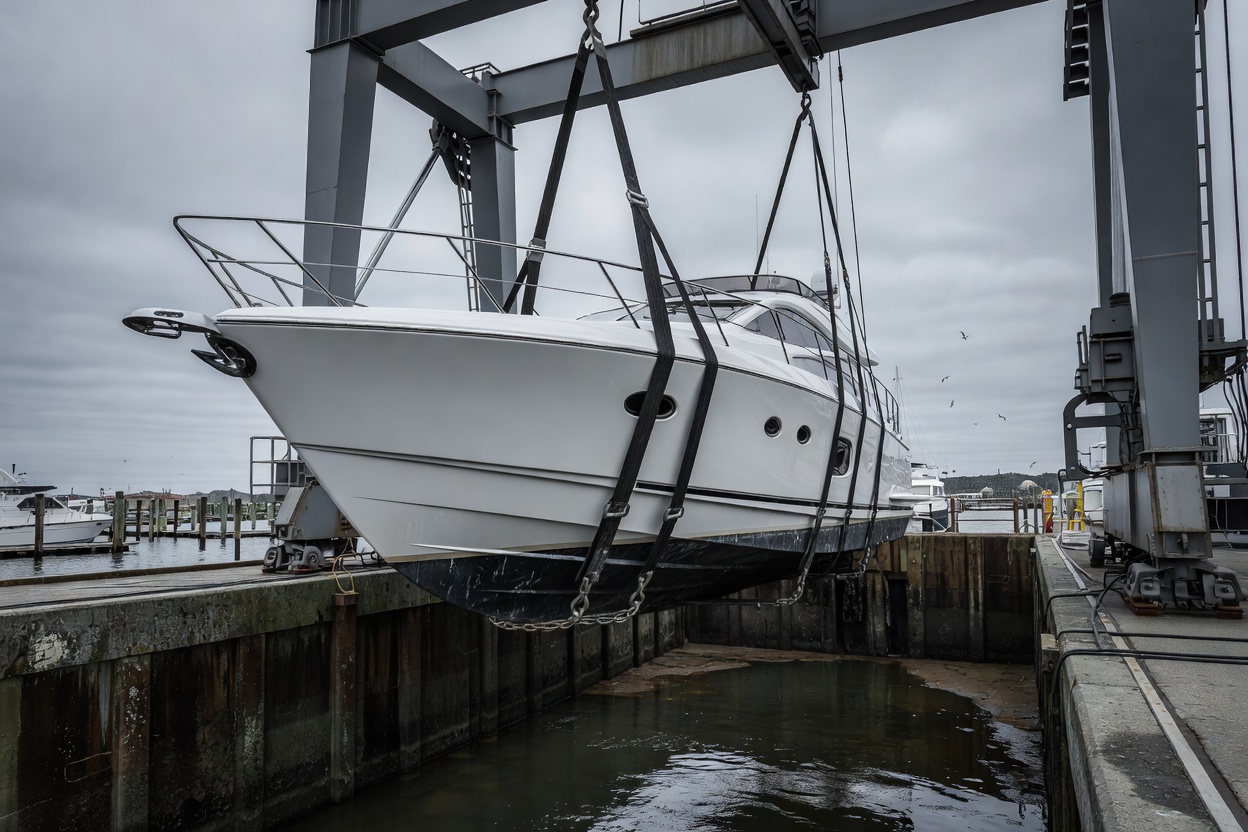
When re-launching in spring, vessels remain in the hoist slings at water level for 15 minutes prior to unhooking:
- Transducer Housings: Inspect depth and log thru-hulls for hairline housing cracks or missing retaining pins.
- Engine Intake Seacocks: Open valves slowly and observe hose barbs and hose clamps for weeping seawater.
- Stern Gland & Saildrive: Verify packing gland compression or saildrive bellows integrity before engine cranking.
- Bilge Float Activation: Confirm automated bilge pumps trigger manually and discharge cleanly overboard.
Haul-Out Handover Procedures
During autumn haul-out, boat owners must isolate house battery banks, shut propane bottles, pump dry black water holding tanks, and tag ignition keys with the yard master before leaving the compound.
Checklist: 24 Hours Prior to Crane Arrival
- Verify holding tanks and freshwater tanks are drained to reduce unnecessary lift weight.
- Mark sling position markers clearly on the port and starboard toerails.
- Stow biminis, sprayhoods, and loose deck items to eliminate snag hazards.
- Confirm propeller shaft log and stern gland access panels are unobstructed for bilge checks.