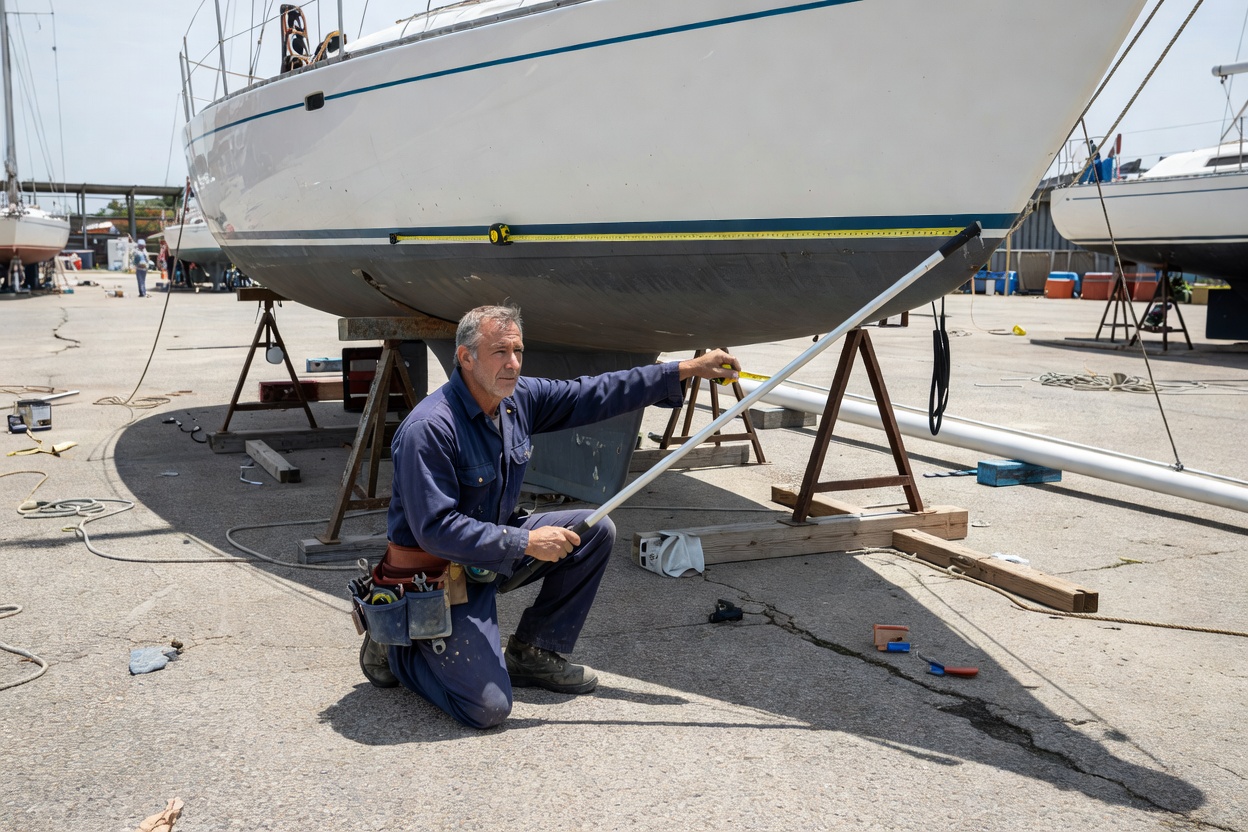
Weight Distribution and Keel Loading
Inboard vessels rest the vast majority of their deadweight on the keel. Keel blocks must bear 80% to 90% of the vessel displacement. Lateral screw jacks, cradles, and props only provide balance against windage and lateral movement.
Placing excessive downward pressure on hull screw pads deforms thin-cored composite hulls. Screw pads must be positioned over internal structural bulkheads or ring frames identified in manufacturer docking plans.
Mast-Up Versus De-Masted Storage Planning
Storing sailing vessels with the rig standing increases compound windage loads exponentially during North Sea and Atlantic winter gales. Keel-stepped and deck-stepped masts exert different lever stresses on the hull cradle structure.
- De-Masted Vessels: Center of gravity remains low. Reduced windage permits tighter yard spacing and indoor storage door clearances.
- Mast-Up Hardstand: Demands heavy-duty bolted steel cradles with interconnected bracing. Minimum bay spacing increases by 35% to prevent halyard slapping and structural contact.
Access Planning and Retrieval Sequence
Yard compounds operate on a First-In, Last-Out (FILO) or dynamic corridor layout. Owners requiring early spring launches in March must declare schedules during autumn haul-out booking.
Trapping an early launch vessel behind four boats scheduled for May launch creates costly crane dead-mileage and repositioning fees. Systematic route tagging prevents access blockages.
What to Verify Before Compound Placement
- Exact maximum height from keel bottom to radar arch or masthead light.
- Clear position of internal hull bulkheads for cradle pad alignment.
- Total displacement including full fuel and fresh water ballast levels.
- Planned maintenance dates for winter contractors requiring crane or ladder access.