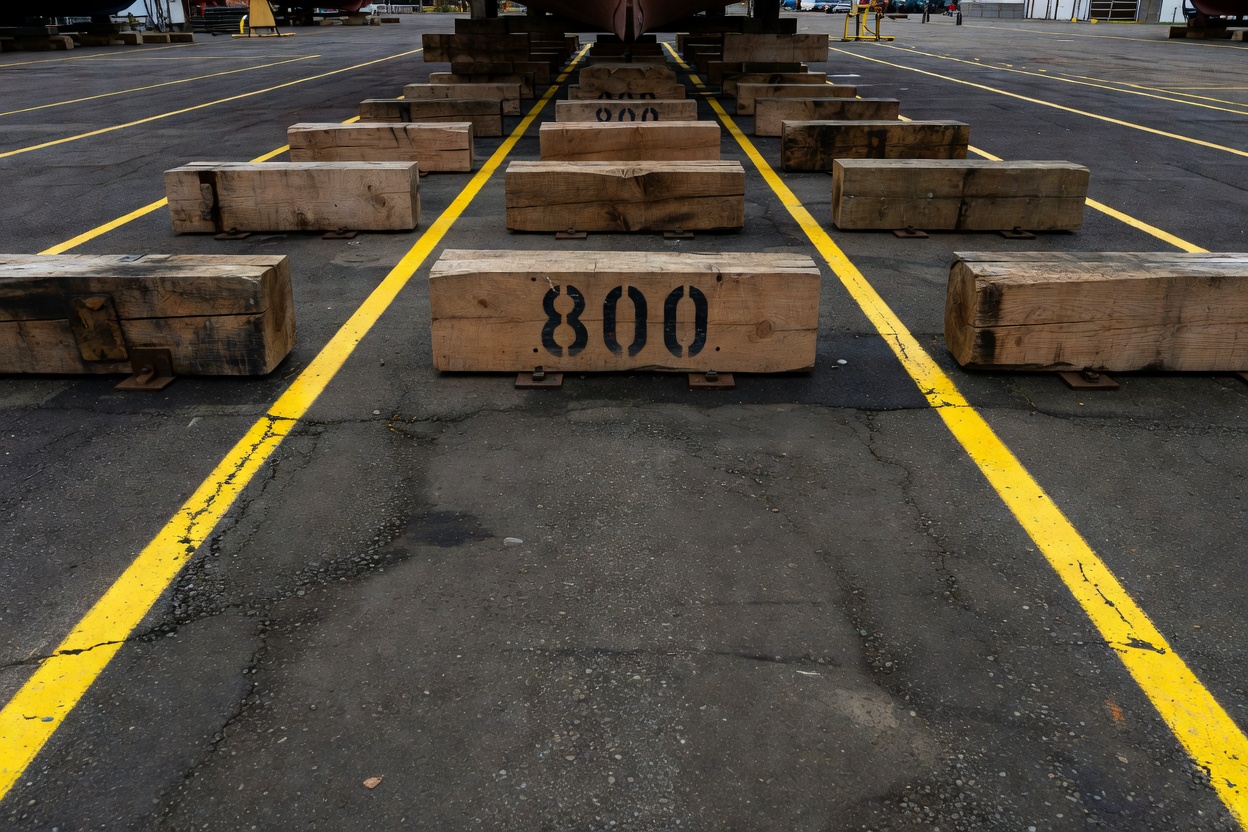
Traffic Corridors and Hydraulic Trailer Envelopes
Moving boats safely requires sweeping turning radiuses. A tractor pulling a 12-meter vessel on a hydraulic cradle trailer requires a minimum turning corridor width of 8.5 meters to prevent hull-to-hull contact on corner bays.
Yard layouts must preserve arterial lanes. Parking trailers or storing tender dinghies inside arterial fire lanes violates marine compound insurance compliance and blocks emergency response access.
Support Rigging and Cradle Mechanical Checks
Before lowering any vessel onto yard gear, mechanical cradles undergo structural inspection:
- Acme Threads: Clean of salt crust, lubricated with marine grease, free of thread galling.
- Pivot Pins: Inspected for shear deformation and retained with locking cotter pins.
- Pads & Plywood Faces: Marine-grade plywood pads intact with no rot or splintered surfaces that could mar anti-fouling coatings.
Wash-Down Bays and Antifouling Containment
Environmental regulations strictly prohibit pressure-wash slurry containing biocides, copper, and loose antifouling paint from entering harbor basins. Prepared yards run wash-down water through multi-stage sediment separation tanks and carbon filters.
Yard Maintenance Routine Checklist
- Sweep hardstand surfaces clear of loose gravel and metal fasteners before trailer movements.
- Verify shore power pedestal ground-fault trip switches (RCD 30mA).
- Clear yard perimeter storm drains of autumn leaf litter and debris.
- Verify water supply isolation valves are frost-protected to prevent pipe bursts.